Healthcare and NHS
Every
visit by assessors and inspectors at Wye Valley NHS Trust includes a look at the Sematics record
“It's a good solution, it looks after itself.”
Regulation: ISO 15189 and UKAS assessments
Read the Wye Valley NHS Trust storyUKAS accredited calibration laboratory No. 10723
For fridges, freezers, cold rooms and stores
Sensors on every unit report to Sematics, our monitoring platform. Alarms reach the people on duty at any hour, and every reading, alarm and response is kept for your audit.
3.8°C
The short answer
A temperature monitoring system records the temperature of each fridge, freezer, room or store automatically, raises an alarm when a reading goes outside the limits you set, and keeps the history as evidence. It replaces manual checks and min/max thermometers, which only show the extremes and not when or for how long they happened.
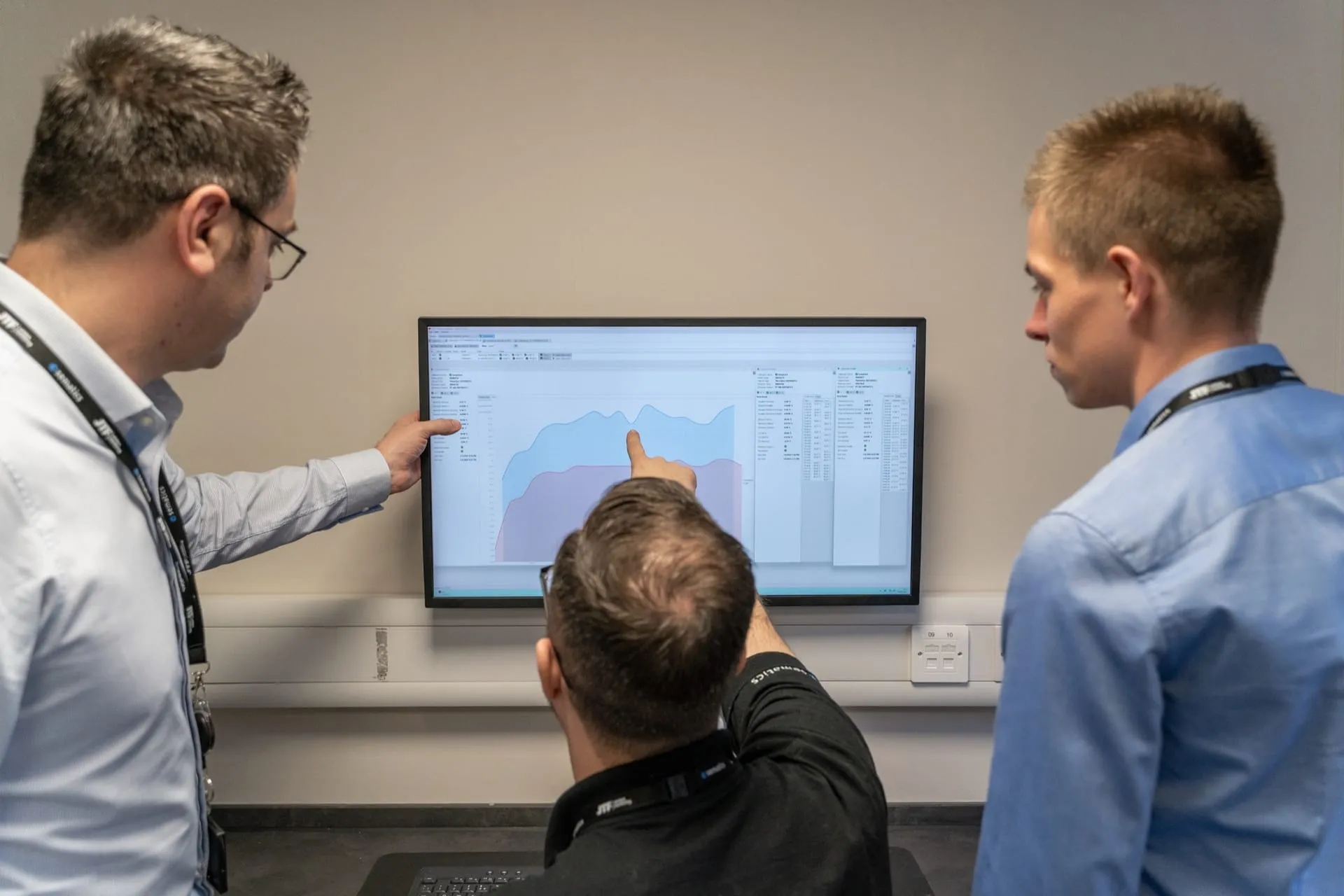
What it looks like
Incident opened at 02:14, acknowledged at 02:31, closed with root cause and CAPA.
350+
UK sites monitored
Dots show the spread, not real sites.
What's included
One system and one team, so nothing falls between suppliers.
On fridges, freezers, ULT freezers, incubators, cold rooms, stores and vehicles, with door contacts where an open door is the usual cause.
You set the limits per unit. Alerts go to the people on duty, by phone and email, at any hour.
Every alarm records who responded, when and what they did, so the record shows action as well as readings.
Daily review on screen instead of paper rounds, with sign-offs that show the data was looked at, not just collected.
Calibration for every sensor we supply: traceable to national standards as standard, or UKAS accredited where you need it (temperature in our own UKAS accredited calibration laboratory No. 10723 or on your site; other parameters through accredited partners). Each certificate is held against its sensor.
Installation, training and engineer cover from the same UK team, set out in a service agreement.
How it works
We look at what you store, who inspects you and where the units are, then plan sensors, gateways and alarm limits with you.
Our engineers fit and test the sensors, set the alarm routes and check readings reach Sematics.
Short sessions on responding to alarms, reviewing data and pulling records for an inspection.
Annual calibration, support when an alarm or sensor needs attention, and a review when your site changes.
What it covers
Temperature first, on the equipment the rules care about.
| Unit | Where you'll find it | Rules that usually apply |
|---|---|---|
| Fridges and freezers | Pharmacies, GP practices, wards, labs, blood banks | Green Book chapter 3, MHRA GDP, BSQR, CQC |
| ULT freezers (−80 °C) | Research labs, biobanks, pathology | ISO 15189 (for labs) |
| Cold rooms and stores | Distribution centres, food manufacturers, hospital stores | MHRA GDP, BRCGS |
| Incubators and lab rooms | Pathology and microbiology labs | ISO 15189 |
| Warehouses (ambient) | Pharmaceutical wholesale | MHRA GDP (mapping and monitoring) |
| Vehicles and mobile units | Cold chain transport, outreach services | MHRA GDP chapter 9, customer audits |
Every sensor we supply comes with calibration: traceable to national standards as standard, or UKAS accredited where you need it. UKAS temperature calibration is in our own UKAS accredited calibration laboratory No. 10723, for probes in a dry block from −90 °C to +135 °C, and for whole loggers and wireless sensors in an air chamber from −35 °C to +40 °C; humidity, CO₂ and other parameters through accredited partner laboratories.
Healthcare and NHS
Every
visit by assessors and inspectors at Wye Valley NHS Trust includes a look at the Sematics record
“It's a good solution, it looks after itself.”
Regulation: ISO 15189 and UKAS assessments
Read the Wye Valley NHS Trust storyWhich rules it serves
Monitoring at the mapped extremes, tested alarms, traceable calibration.
Read the guideRecords, review and calibration for UKAS lab assessments.
Read the guideDaily readings, the four Rs and what to do in a fridge failure.
Read the guideA complete temperature record and action on every alarm.
Read the guideQuestions
We ask what you store, who inspects or assesses you (the MHRA, the CQC, BRCGS or your customers' auditors inspect; UKAS assesses) and how you record and respond today. You get a plain list of the gaps we would close first. If there are none, we'll tell you.
Yes. We service and support older wireless systems, and can keep yours running while we plan a move with you.
We arrange calibration for every sensor we supply: traceable to national standards as standard, or UKAS accredited where you need it. Temperature sensors are calibrated in our own lab in Tamworth or at your site; for UKAS work it is our UKAS accredited calibration laboratory No. 10723, accredited to ISO/IEC 17025 for temperature for probes in a dry block from −90 °C to +135 °C, and for whole loggers and wireless sensors in an air chamber from −35 °C to +40 °C. Humidity, CO₂ and other parameters go to accredited partner laboratories. Each sensor has its own certificate.
Temperature: our own lab, traceable as standard or UKAS accredited in our UKAS accredited calibration laboratory No. 10723. Humidity, CO₂ and other parameters: an accredited partner laboratory, which issues its own certificate under its own UKAS accreditation number. We tell you which you'll get before we start. We carry out 10,000+ sensor calibrations a year.
The alert goes to the people you name for that unit, by phone and email. Each response is recorded with who acted and what they did.
It depends on how many units and sites you have. We quote after the check, once we know what you need.
20-minute compliance check
In 20 minutes we look at how you prove temperature to your inspector or auditor, and where the gaps are. You get a short list of what to fix first. No product tour.