For QA teams, Responsible Persons and system owners

Validating your monitoring system, in three clear parts

A cloud monitoring system is qualified in three parts: the hardware at your site, the software platform, and how you configure and use it. JTF qualifies the hardware (IQ and OQ), Sematics validates the platform and verifies each release according to its risk, and we help you qualify your own configuration and use (URS, DQ and PQ).

  • Hardware IQ and OQ by JTF, as the installer
  • The Sematics platform validated against its requirements, each release verified according to its risk
  • Your URS, DQ and PQ, designed and supported by JTF
  • The monitoring system only: your fridges, rooms and processes stay under your own plan
Cold room02:14

3.8°C

Within range · alarm limits 0.0 to 8.0 °C. Example reading.

The short answer

How do IQ, OQ and PQ fit a cloud monitoring platform?

The classic stages still apply, split by who can prove each part. Hardware: installation qualification (IQ) shows the right sensors, gateways and probes are installed as specified, and operational qualification (OQ) shows they work as intended at your site; JTF does both as a separate exercise. Platform: Sematics carries out computer system validation (CSV) aligned to EU GMP Annex 11: every function is specified and risk-assessed, and each release is verified according to its risk, with controls designed for data integrity (ALCOA+), so once you have assessed Sematics and accepted its evidence for the functions you use, you need not repeat that testing. Your use: you state your requirements (URS), qualify the configuration designed from them (DQ, design and configuration qualification) and show the monitoring system performs in your operation (PQ). JTF validates the monitoring system it supplies; for your fridges, freezers and rooms, our temperature mapping gives you the evidence for their qualification, and validating your processes stays with you.

Who proves what

Three parts, one qualification package

Each party qualifies what only it can. Together they cover the whole monitoring system your inspector sees, and a quality system keeps the platform part valid after go-live.

The three layers of a qualified monitoring system
  1. JTFHardware qualificationOnce at installation, and when hardware changes
    • IQ: the right sensors, gateways and probes, installed and labelled as specified
    • Calibration certificate for each sensor
    • OQ: readings and alarms verified at the site
    • Signal and coverage checked, fail states tested
  2. SematicsComputer system validation (CSV)Continuously, release by release, aligned to EU GMP Annex 11
    • Every function specified and risk-assessed
    • Requirements traced through design and specification to tests and results
    • Each release verified according to its risk; an automated release validation pipeline is being introduced
    • The programme includes a verification report for each release and a validation summary: ask us for their current status
  3. You, with JTFConfiguration and useAt go-live, then at periodic review
    • URS: your sites' requirements
    • DQ: configuration designed from the URS and checked item by item
    • PQ: the monitoring system's performance in your operation
    • Quality and technical agreement (QTA)

Hardware IQ and OQ + platform validated by Sematics + your URS, DQ and PQ = a complete qualification package

Every platform release
  1. Requested and classifiedEach change has a requirement and acceptance criteria, a second engineer's review, and a risk class worked out from the change itself
  2. Verified by riskVerified according to its risk class, on an environment built from the release
  3. Reported and approvedThe programme's verification report for the release traces each requirement to its results, reviewed by people who didn't do the work
  4. Minor or majorA release that changes validated behaviour is major: notified in advance, with a configuration regression report run against your configuration
  5. Deployed and checkedThe exact software verified is deployed, checked after deployment, and recorded in your system release manifest
Your part, from requirements to review
  1. URSAreas, limits, delays, who is told and when, reports, roles
  2. DQConfiguration designed from the URS; the exported baseline compared item by item
  3. PQNotifications to your people, escalation, offline detection, reports, roles
  4. Periodic reviewAudit trail reviewed and the configuration baseline refreshed
How the platform stays validated after go-live
  1. SematicsWhen something goes wrongFrom the moment it is found
    • The programme is designed so a failed test on a critical function raises a deviation automatically
    • Contained, then assessed for its effect on each customer's records
    • Affected customers told, records corrected only by a supplementary record
    • Root cause and corrective and preventive action (CAPA), checked for effectiveness
  2. SematicsSecurity and continuityDay to day, and tested
    • Named accounts, two-factor login on by default, roles by company, site, zone and asset, and tested separation of each customer's data
    • Encrypted in transit (TLS 1.2 minimum, 1.3 by default); backups encrypted at rest
    • Gateways connect outbound only, over TLS with a client certificate
    • Backups to a second location, with restore tests and recovery objectives in the programme
  3. Sematics, JTF and partnersPeople and oversightBefore the work, then periodically
    • Staff trained by role, with checks of understanding and refreshers
    • Suppliers classified by their effect on records, assessed and overseen
    • A programme of internal audits by people independent of the work, and management review
    • A programme of periodic review of the validated state, at least once a year

Deviations and CAPA + security and continuity + trained people and independent oversight = the programme that keeps the platform in a validated state

What's included

What JTF does, and what Sematics provides

JTF is an authorised Sematics partner in the UK: we install and qualify the hardware, design the configuration, provide the templates and support your DQ and PQ. Sematics verifies the platform against its stated intended use (storage and transport monitoring of temperature, humidity and door state) and maintains its validated state; you assess that evidence against your own intended use.

  • Hardware IQ and OQ

    IQ: the sensors, gateways and probes on the agreed design, with serial numbers, locations, labels and a calibration certificate for each sensor recorded. OQ: at your site, readings checked, alarms tested at their limits, signal and coverage confirmed, and what happens when a sensor or gateway fails.

  • URS, configuration design and DQ

    We help you write your site user requirements, then design the configuration from them: alarm limits and delays, offline detection, notification and escalation, investigation entries, roles. The platform exports your complete configuration, and DQ compares that baseline item by item with your URS.

  • PQ, performance qualification

    Tests of what depends on you: notification to your people by every channel, escalation, offline detection, connectivity loss, reports, roles and the mobile app, with your QA approving each document.

  • Platform CSV, release by release

    A risk-based lifecycle following ICH Q9(R1) and the risk-based approach of GAMP 5. Every requirement traces through the functional design and the platform specification to the tests that verify it and their results. Each release is assessed and verified according to its risk. Sematics's validation programme includes a verification report for each release and a validation summary; ask us for the current status and the latest approved documents under the quality and technical agreement.

  • Change control and release notice

    Every change is requested, reviewed by a second engineer and classified by risk. Minor releases come with release notes; major releases, which change validated behaviour, are notified in advance with the release documentation and a configuration regression report against your configuration. You assess each one under your change control.

  • The quality system behind it

    The Sematics programme provides for deviations and CAPA with an assessment of the effect on your records, a periodic review of the validated state, security and data protection controls, backup and recovery tests, role-based training of Sematics, JTF and partner staff, internal audit and management review, and assessment of every supplier the platform relies on. Ask us for the current status of each.

How it works

From scope to a signed package

  1. 01

    Agree the scope and the QTA

    Which sites, areas and functions are in scope, and the quality and technical agreement that sets out each party's obligations, including release notice, audit rights and exit.

  2. 02

    Assess Sematics and write your URS

    You review the validation package and approve your reliance on it. Then your URS: what each area must maintain, who is told of an excursion and when, the investigation to record, the reports and who may do what.

  3. 03

    Install, then IQ and OQ

    JTF installs the hardware and qualifies it at your site.

  4. 04

    Design the configuration and run DQ

    Configured from the URS, exported, and compared item by item.

  5. 05

    Run PQ and hand over

    Tests in your operation, deviations closed, and the package ready for your QA to approve.

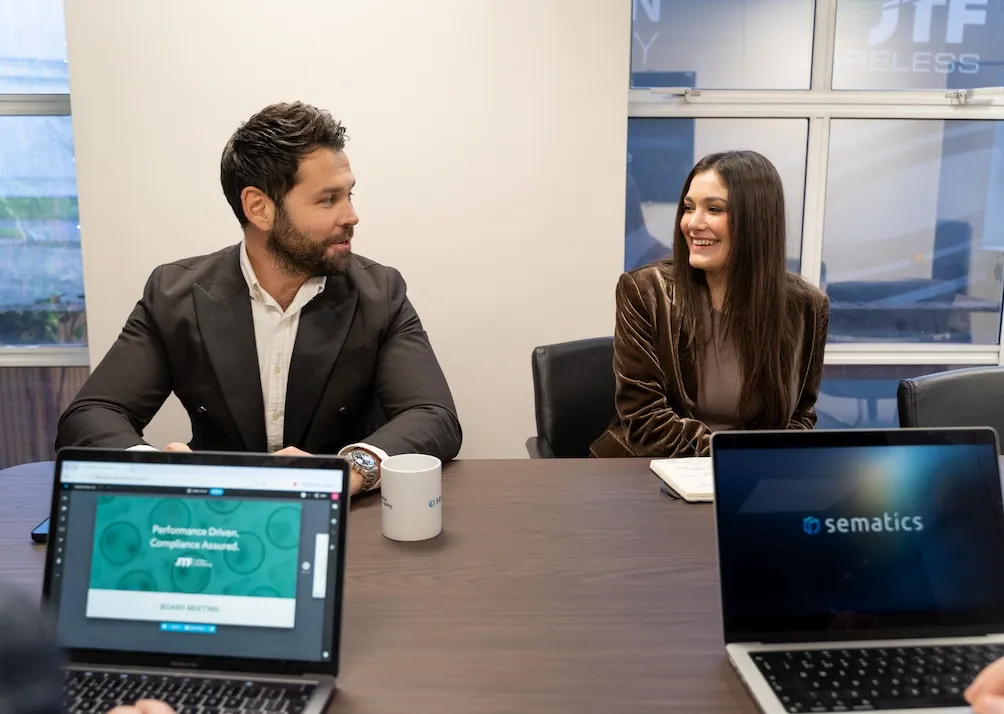
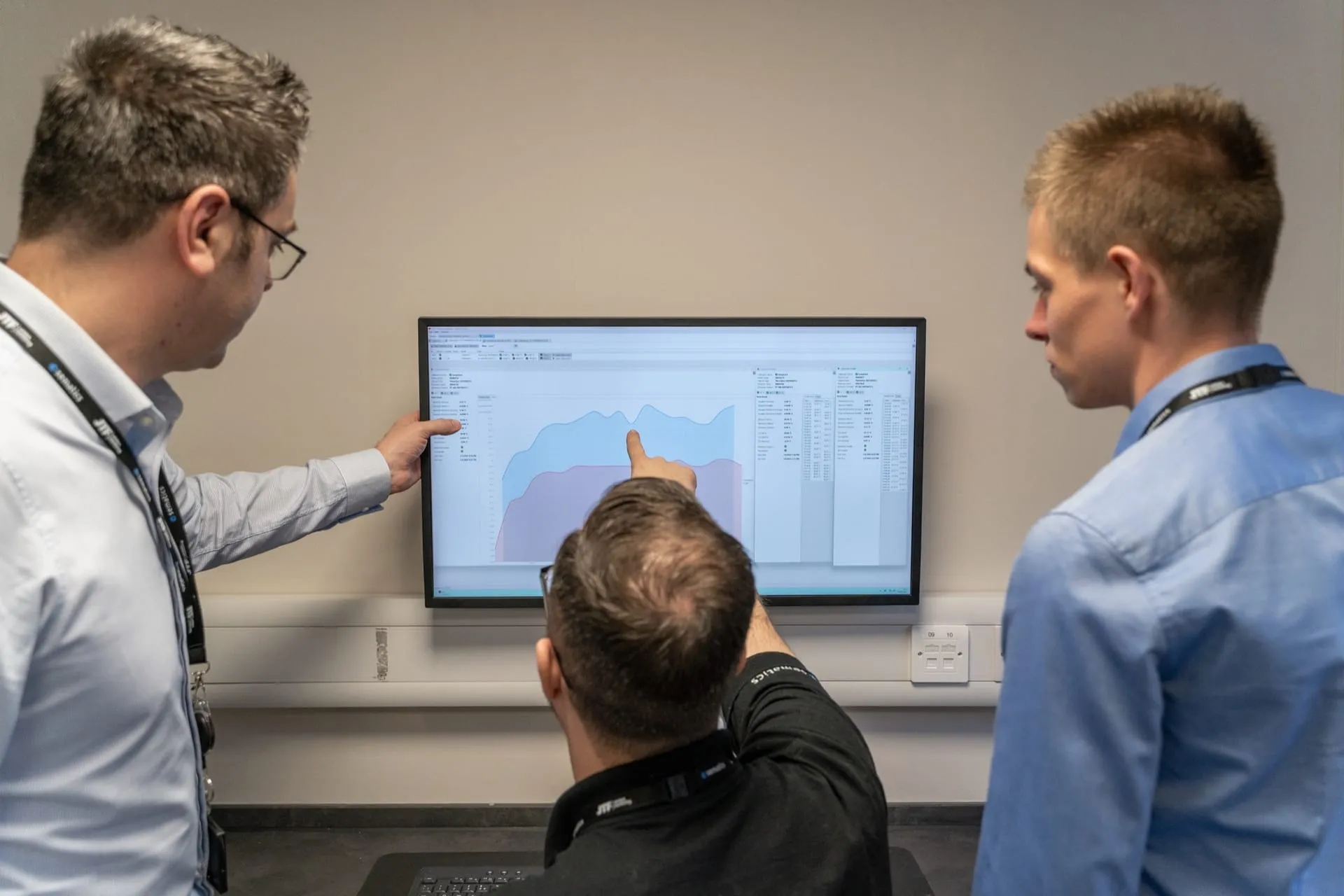
Two JTF staff reviewing the Sematics monitoring platform on laptops

What it covers

Each part, who does it and what it proves

The classic IQ, OQ and PQ, mapped to the parties who can evidence them, and the controls that maintain the platform's validated state release after release.

PartWhoWhat it proves
Hardware IQJTFThe right hardware is installed, labelled and calibrated as specified
Hardware OQJTFThe hardware works as intended at your site: readings, alarms, coverage, fail states
Risk assessmentSematicsEvery platform function is classified by its effect on product quality, patient safety and data integrity, and testing is concentrated where it matters most
TraceabilitySematicsEach requirement runs through the functional design and the platform specification to its tests and their results, and any gap is justified
Release verification (Annex 11)Sematics, at each releaseEach release is assessed and verified according to its risk against the platform requirements; the programme includes an independently reviewed verification report for each release
Change control and releasesSematics, with you and JTFChanges are reviewed and classified; major releases are notified in advance with a configuration regression report against your configuration
Deviations and CAPASematicsProblems are contained, assessed for their effect on your records, notified to you where you're affected, and fixed at the root
Security and data protectionSematicsAccess control, separation of each customer's data, encryption in transit and encrypted backups, and a full audit trail
Backup and continuitySematics, with youBackups to a second location, with restore tests and recovery objectives in the programme; you plan alternative monitoring for any downtime
Training, audit and suppliersSematics, JTF and partnersStaff trained for their roles; the programme provides for audits by people independent of the work; suppliers assessed and overseen
Periodic reviewSematics, and youThe programme provides for a review of the platform's validated state at least once a year; you review your own use and refresh your configuration baseline
URSYou, supported by JTFWhat your sites need the monitoring system to do
DQYou, with JTFThe configuration meets your URS, item by item
PQYou, with JTFThe monitoring system performs in your operation, with your people, hardware and procedures
Migration (HQ addendum)You, with JTFHistory carried over from a previous system, where you move to Sematics

Your QA approves each document. JTF validates the monitoring system it supplies: the Sematics platform (through Sematics) and JTF hardware. For your fridges, freezers and rooms, our temperature mapping service provides the temperature distribution evidence for their qualification (usually part of OQ and PQ), and the re-mapping when something changes. Your validation plan, your processes and the decision that each area is qualified stay with you. Calibration for every sensor we supply: traceable to national standards as standard, or UKAS accredited where you need it (temperature in our own UKAS accredited calibration laboratory No. 10723; other parameters through accredited partners).

Healthcare and NHS

Every

visit by assessors and inspectors at Wye Valley NHS Trust includes a look at the Sematics record

“They always come and they always look at the Sematics system and they're always happy with what we do.”

Sophie Protheroe, Blood Transfusion Section Manager, Wye Valley NHS Trust

Regulation: ISO 15189 and UKAS assessments

Read the Wye Valley NHS Trust story

Questions

What people ask us

Do we have to repeat Sematics' testing of the platform?

Not once you have assessed Sematics and accepted its evidence. Sematics validates the platform and verifies each release according to its risk. You assess Sematics, approve your reliance on that evidence for the functions you use, and qualify what Sematics can't: your requirements, your configuration, notification to your people, your hardware and your procedures. You stay accountable for your use of the system, as Annex 11 expects.

How is the Sematics platform validated?

As a continuous, risk-based lifecycle aligned to EU GMP Annex 11, applying the stricter July 2025 consultation draft where it asks more. Risk is assessed following ICH Q9(R1) and the risk-based approach of GAMP 5, function by function. Requirements trace through the functional design and the platform specification to the tests and their results. Each release is the unit of evidence: every test suite runs on an environment built from it, results are sealed so any later change would show, and the programme includes a verification report for each release, reviewed by people who didn't do the work, and a validation summary; ask us for the current status and the latest approved documents under the quality and technical agreement. See Annex 11, clause by clause.

What happens when Sematics releases an update?

Each release is assessed and verified by Sematics according to its risk. Minor releases, which don't change validated behaviour, are deployed with release notes afterwards. Major releases are notified in advance with the release documentation and a configuration regression report run against your current configuration export. Urgent fixes are verified too, and documented to you after deployment. You assess each release under your change control and check the system after deployment.

Do configuration changes mean requalifying?

Not usually. Routine changes (user accounts, names) are recorded in the audit trail. A change to who is notified is also followed by an end-to-end alarm test, as our alarm testing position recommends. Changes within the qualified design (a limit or delay within your URS bounds, another escalation tier) are made with a reason and approved as your procedure requires. Only a change to the design, such as a new site or limits outside your URS, goes through change control with the affected DQ and PQ tests.

What happens if something goes wrong with the platform?

It is handled as a deviation. The programme is designed so a failed test on a critical function raises one automatically. Each deviation is contained, assessed for its effect on each customer's records, notifications and reports, and affected customers are told. Records are never altered to correct an error: a supplementary record states the correction. The root cause is found, corrective and preventive action agreed, and its effectiveness checked before the deviation is closed.

How are security and backups handled?

Every user has a named account with two-factor login on by default (a company-wide setting to enforce it is being added), permissions follow roles by company, site, zone and asset, and no customer can see another's data, which is tested. Data is encrypted in transit, backups are encrypted at rest, administrative access is limited and reviewed, and the programme includes backups to a second location, restore tests and defined recovery objectives; ask us for the current status of each. Your part is alternative monitoring during any downtime.

Who checks that Sematics and JTF follow their own procedures?

Staff at Sematics, JTF and other partners are trained for their roles before doing the work, with checks of understanding and refreshers. The programme provides for internal audits by people independent of the work, a management review of releases, deviations, security, supplier performance and training, assessment and oversight of every supplier the platform relies on, and a periodic review of the validated state at least once a year; ask us for the current status. Under the QTA you can audit Sematics too.

Do you validate our fridges, cold rooms or processes?

Partly. JTF validates the monitoring system it supplies: the Sematics platform, through Sematics, and the JTF hardware, through IQ and OQ at your site, and we support your qualification of its configuration and use. For your fridges, freezers and cold rooms, our temperature mapping service gives you the temperature distribution evidence their qualification needs (usually part of OQ and PQ). Approving that qualification, and validating your processes, stays under your own validation plan.

Next step

Ask for the validation package

Customers and prospective customers receive the platform validation evidence under a quality and technical agreement. Tell us who should receive it and we'll set that up.