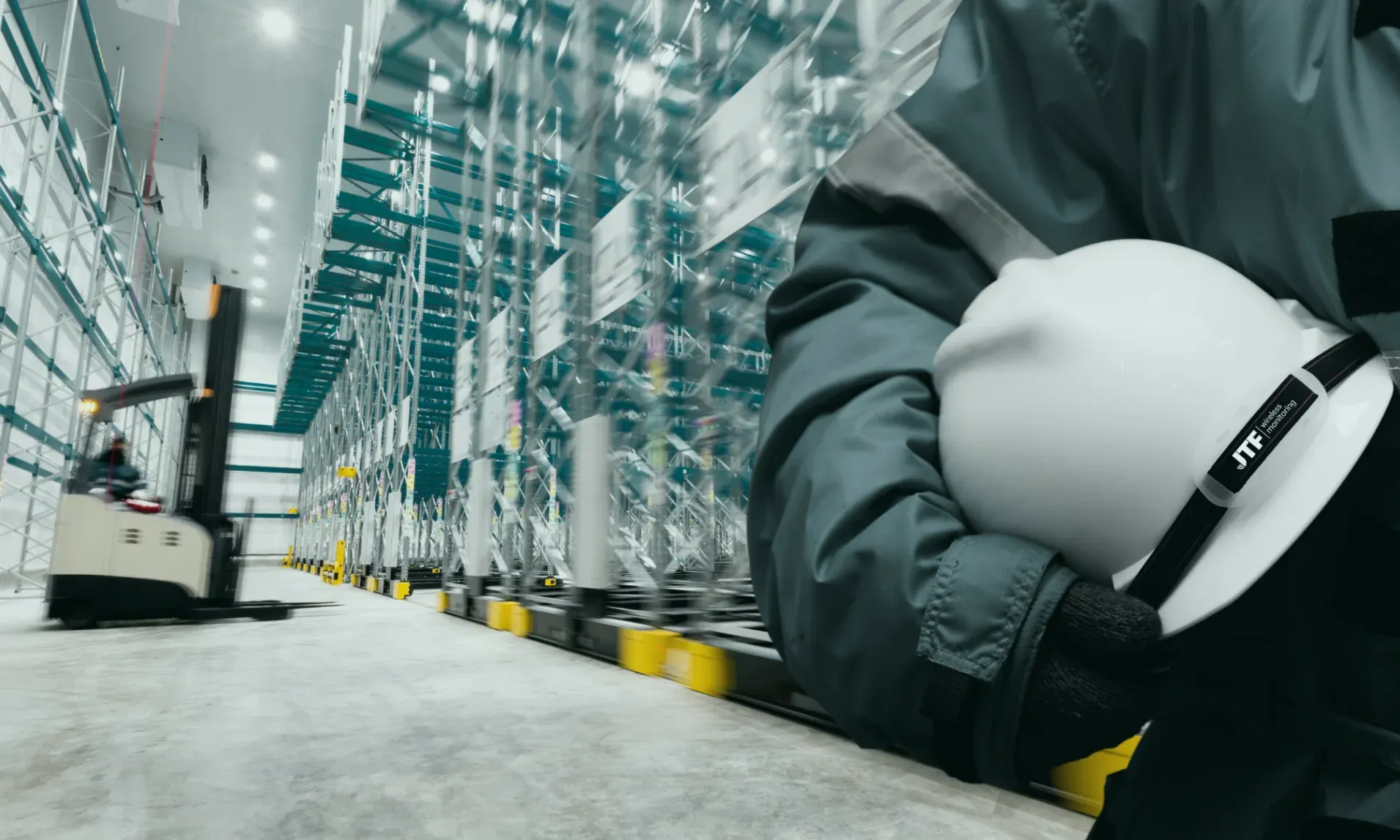
Food and cold storage
16%
less temperature variation in a 12,000 m³ freezer after door monitoring (standard deviation 0.69 to 0.58 °C)
Regulation: Food safety and customer audit standards
Read the case study storyUKAS accredited calibration laboratory No. 10723
For incoming supplies, refrigeration plant and any circuit
A MID approved energy meter on your incoming 3-phase supply, your refrigeration plant or almost any circuit, read through current transformers (CTs) and reporting to Sematics. Energy sits on the same dashboards as the temperatures that plant is there to hold.
−21.3°C
The short answer
Energy monitoring meters the electricity a supply or a circuit uses and records it over time, so you can see where the energy goes, when demand peaks and when consumption starts to rise. We fit a CT-operated meter on the circuits you choose, such as the incoming supply or the compressors on a cold store, and its readings go to Sematics alongside your temperature records.
What's included
We plan and set up the metering; a qualified electrician from one of our electrical contractor partners fits it.
The Eastron SDM630MCT LoRaWAN meter for 3-phase or single-phase supplies. Its kWh register is MID approved, so the reading can support recharging or billing between departments or tenants.
Current transformers sized to each circuit: the incoming supply, a plant panel, a compressor or defrost heaters in a cold store, a line in a food factory. The CTs are supplied and fitted by our electrical contractor partners.
Fitting a meter and CTs is work on mains circuits, so it is done by a qualified electrician from one of our electrical contractor partners, to BS 7671 and the Electricity at Work Regulations 1989, with the certificate for the work.
Readings reach Sematics over LoRaWAN through the same gateways as your temperature sensors. Sematics records total energy (kWh), power demand, current and frequency, charted next to the rooms that plant cools. See the platform.
A compressor working harder for the same temperature, defrost running longer, a door left open: each can show in the energy and the temperature together, so you can look before it becomes a breakdown or a bill.
Separate meters on plant, process areas or buildings, including HVAC and utilities on a pharmaceutical manufacturing site, show what each uses, so costs can be shared on readings rather than estimates.
How it works
We agree with you which supplies and circuits to meter, and check panel space, CT sizes and gateway coverage with our electrical contractor partner. You get a quote for the site.
A qualified electrician fits the meter, fused voltage connections and the CTs, and certifies the work. Work on an incoming supply or a plant panel may need a planned shutdown; we agree it with you, and with your refrigeration contractor where it is their plant.
We set the meter up on your Sematics account, next to the temperature sensors on the same plant or room, and check the readings arrive.
We look at the first weeks of readings with you, so you have a baseline to compare against when something changes.
What it covers
Start with the biggest loads. On a cold store that is usually the refrigeration plant.
| Circuit | Why meter it | What you see in Sematics |
|---|---|---|
| Incoming 3-phase supply | The whole site's consumption and when demand peaks | Energy, power demand, current |
| Refrigeration compressors and condensers | Usually the biggest load on a cold store or chiller | Energy and demand beside the room temperature |
| Defrost heaters | Defrost running more often or longer than it should | Energy over each day |
| Production lines and process rooms | What each area uses, for costing and planning | Energy per circuit |
| Departments, buildings or tenants | Recharging on readings, from a MID approved kWh register | Energy per meter |
The meter measures more than Sematics records today, including per-phase values and power factor. Sematics records total energy, power demand, current and frequency. Ask us if you need more on the platform.
Food and cold storage
16%
less temperature variation in a 12,000 m³ freezer after door monitoring (standard deviation 0.69 to 0.58 °C)
Regulation: Food safety and customer audit standards
Read the case study storyQuestions
Yes. The meter and CTs connect to mains circuits, so a qualified electrician from one of our electrical contractor partners fits them, to BS 7671 and the Electricity at Work Regulations 1989, and certifies the work. We plan the metering, set it up on Sematics and support it afterwards.
Almost any: an incoming 3-phase supply, a single-phase circuit, a plant panel, a compressor or a production line. The CTs are sized to each circuit by our electrical contractor partner, and the meter needs a voltage connection from the same supply and space on a DIN rail in a board or enclosure (it is rated IP51, for indoor use).
The meter is MID approved for active energy (kWh), which is what is expected of a meter whose readings are used to bill. MID covers kWh only, not the other values the meter shows. For a CT-operated meter the result also depends on the CTs and on the CT ratio set on the meter, so for recharging we plan CTs of a suitable accuracy and record the ratio at installation. The billing reading is the meter's own kWh register.
It shows what your plant actually uses, before and after a change, so any saving is measured rather than assumed. We don't promise a figure in advance. Our freezer door monitoring case study shows measured temperature results and an energy estimate, labelled as an estimate, with its working in the full report (PDF).
The meter measures voltage, current and power factor on each phase. Sematics records total energy, power demand, current and frequency today. If you need per-phase values on the platform, ask us and we will tell you what is possible for your site.
No. Our calibration service is for temperature sensors. The energy meter's accuracy is the manufacturer's, set by its MID approval and accuracy class.
It depends on how many supplies and circuits you meter and what the installation involves. We quote per site after a survey.
Next step
Tell us your sites, units and the services you want, and we'll send a written quote. If you'd rather talk it through first, call us.
or call 0121 794 8092