Node+ is a small, sealed LoRaWAN sensor built for fixed monitoring in regulated stores: pharmacy and vaccine fridges, freezers, cold rooms, warehouses and laboratories. Its internal temperature sensor reads to ±0.1 °C, it reaches around 1 km inside buildings, runs for up to 4 years on two AA lithium cells at 5-minute logging, and stores up to 100 days of readings if the network drops.
There are 1,900+ LoRaWAN node sensors on the Sematics platform today. Below are the specs we are asked about most, taken from the Node+ datasheets, with what each one means when an inspector or assessor looks at your records.
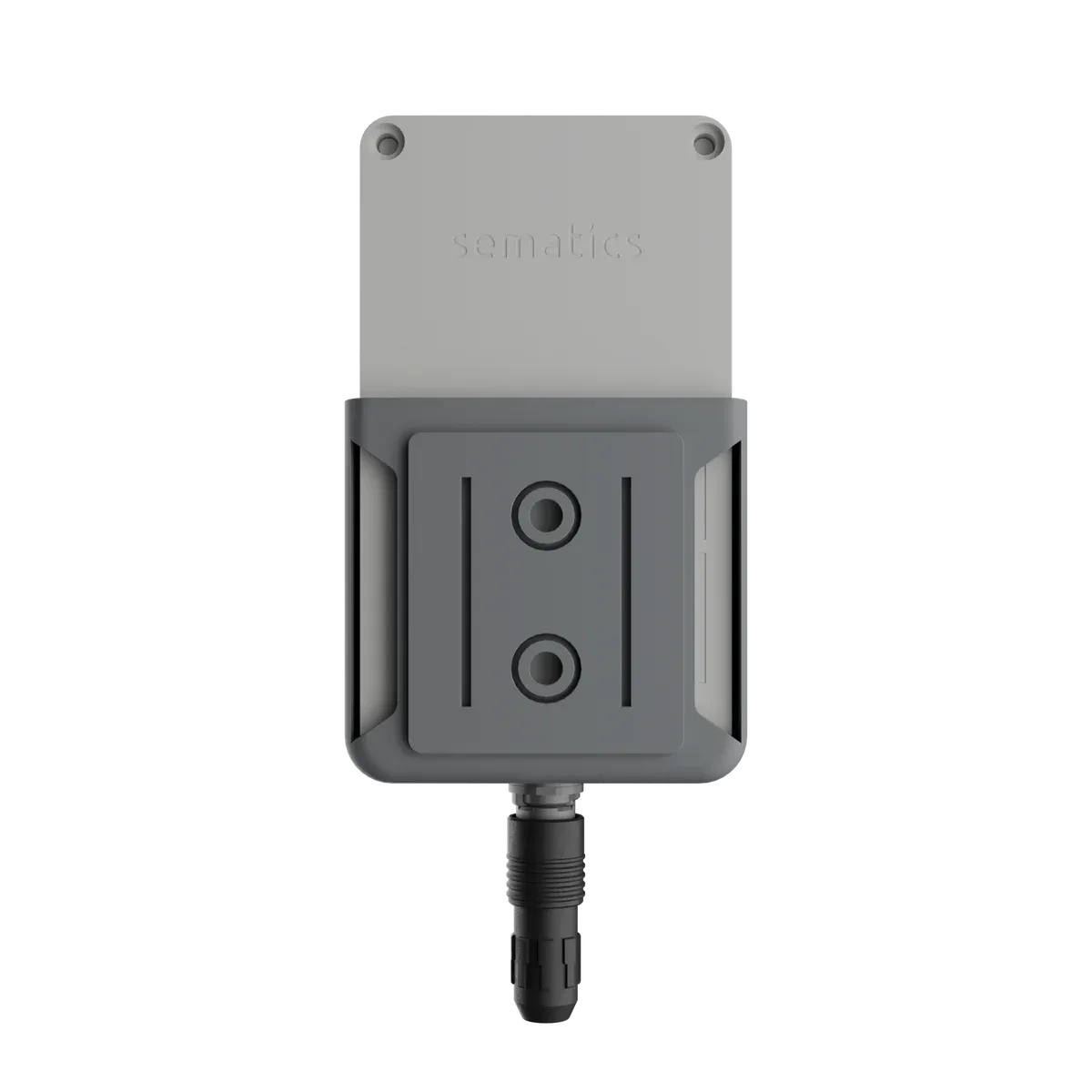
The specs at a glance
| Spec | Node+ value |
|---|---|
| Internal temperature sensor | −40 °C to +85 °C, ±0.1 °C (±0.09 °C from 20 to 42 °C, typical), resolution 0.008 °C |
| Radio | LoRaWAN Class A, 868 MHz |
| Range | ~1 km in built environments; up to 20 km line of sight with an elevated antenna |
| Logging interval | 5 minutes by default, set on the platform |
| Battery | 2 × AA lithium, field-replaceable; up to 4 years at 5-minute logging, 8+ years at 10 to 15 minutes |
| Onboard memory | Up to 100 days of readings if the network goes down, resent automatically on reconnection |
| Enclosure | IP67 (dust-tight, submersible to 1 m for 30 minutes), 99 × 56 × 32 mm without bracket |
| Operating conditions | −40 °C to +85 °C, 0 to 95% RH non-condensing |
| Certifications | CE, UKCA, RoHS 3, FCC Part 15; temperature models designed to meet EN 12830:2018, accuracy class 0.2 |
Accuracy: ±0.1 °C on the internal sensor
The internal sensor reads to ±0.1 °C across −25 °C to +55 °C, tightening to ±0.09 °C between 20 and 42 °C and widening to ±0.12 °C at the extremes. For a vaccine fridge with limits of 2 to 8 °C, that leaves plenty of margin between what the sensor says and where the alarm sits.
Sensor accuracy is the manufacturer's figure. What an assessor will ask for is the calibration certificate and its uncertainty. We provide calibration for every sensor we supply: traceable to national standards as standard, or UKAS accredited where you need it (temperature in our own UKAS accredited calibration laboratory No. 10723, accredited to ISO/IEC 17025; other parameters through accredited partners). See calibration.
Range: around 1 km indoors
Node+ uses LoRaWAN at 868 MHz, which travels further through walls and floors than Wi-Fi or Bluetooth. The datasheet range is around 1 km in built environments and up to 20 km in clear line of sight with an elevated antenna. The 20 km figure is a theoretical best case; we plan sites on the indoor figure and survey before installing.
Each gateway can take up to 2,000 sensors, so a large site needs few of them. More on the radio in why we use LoRaWAN.
Battery: up to 4 years, field-replaceable
Node+ runs on two replaceable AA lithium cells. At the default 5-minute logging interval they last up to 4 years; at 10 to 15 minutes, 8 years or more. Batteries are changed on site through a sealed compartment, so the sensor stays in place and keeps its history.
Memory and backfill: no gaps when the network drops
If a sensor cannot reach a gateway, because of a power cut to the gateway, a router fault or building work, it keeps logging and stores up to 100 days of readings. When the link returns, missed readings are resent automatically and slot into the record at their original times.
- 09:00Link lostThe gateway loses its connection.
- 09:00 to 11:00Readings storedThe sensor logs every 5 minutes into its own memory.
- 11:00Link backThe gateway reconnects.
- 11:01BackfilledStored readings are resent and the trace has no gap.
What a Node+ does during a network outage. Times are illustrative.
Alarms: to a person, by more than one route
Node+ sends its readings; the Sematics platform decides when to alarm. Alarms go out by email, SMS, voice call and app push, in the order you set, and escalate if nobody acknowledges them. Every alarm, acknowledgement and note is kept with the readings as an audit trail. See alarms and reporting.
Which Node+ for which job
All Node+ models share the same enclosure, radio, battery and memory. They differ in what they measure.
| Model | Measures | Typical use |
|---|---|---|
| Node+ Embedded (SEN-AIN) | Internal temperature only; fully sealed | Fridges, freezers, ambient stores |
| Node+ PT100 (SEN-BEP) | 4-wire PT100 probe, −200 °C to +200 °C, plus internal sensor and door input | Ultra-low freezers, tanks, medical fridges |
| Node+ Digital (SEN-CED) | External temperature and humidity probe, plus internal sensor and door input | Pharmacy stores, labs, ambient rooms |
| Node+ Analog (SEN-AEA) | 4 to 20 mA, 0 to 5 V or 0 to 10 V third-party sensors, plus internal sensor and door input | CO₂, pressure and gas |
| Node+ IO (SEN-AED) | Door contact only, open and close timestamped with duration | Cold-room and cabinet doors |
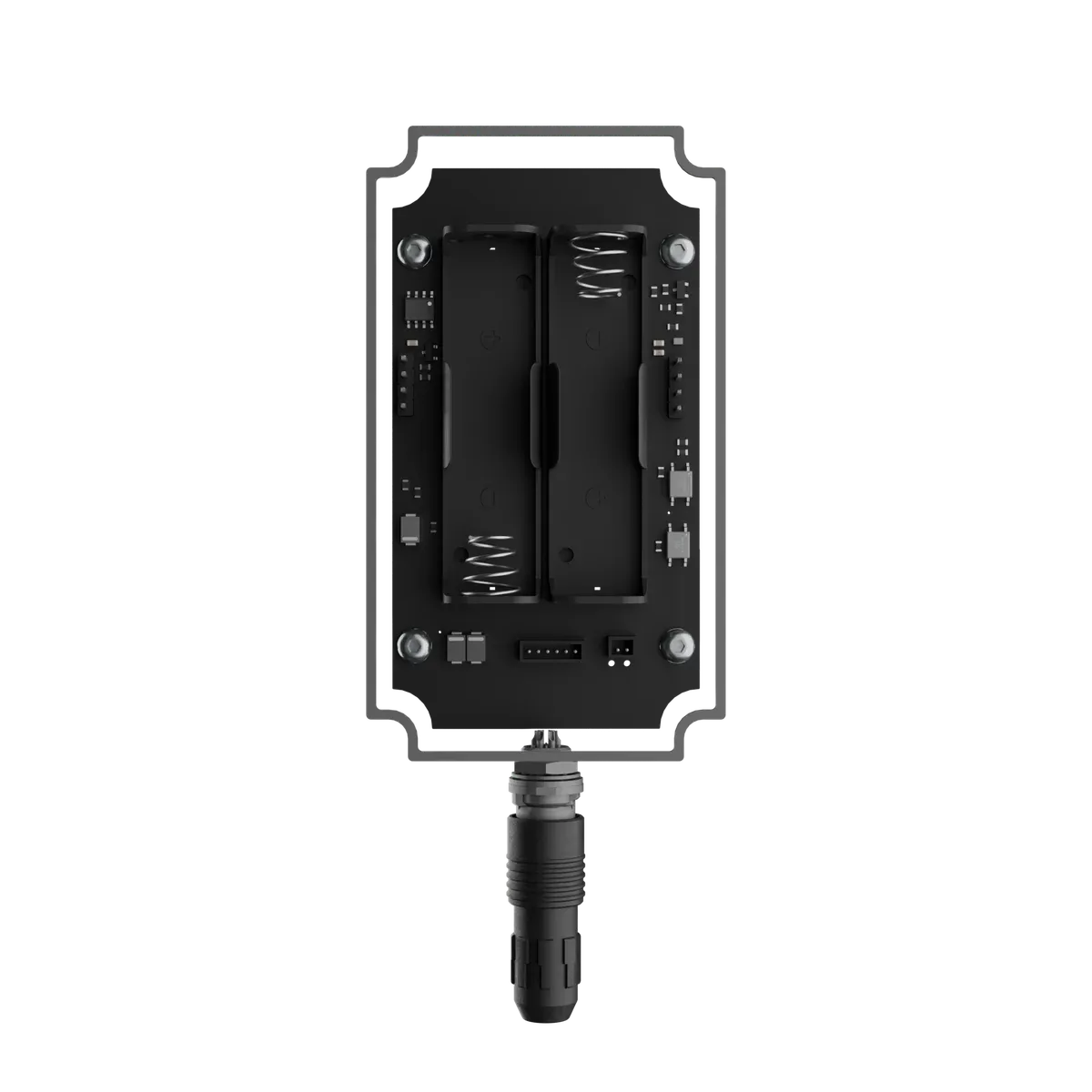
Full datasheet tables are on each product page: Node+ Embedded, Node+ PT100, Node+ Digital, Node+ Analog and Node+ IO. Node+ is for fixed sites.Vehicles and moving assets use our cellular trackers with Bluetooth sensors instead; the hardware guide covers both.
Questions people ask
How accurate is a Node+ sensor?
The internal sensor is ±0.1 °C from −25 °C to +55 °C (±0.09 °C from 20 to 42 °C, typical). Probe accuracy depends on the model: ±0.1 °C typical for the PT100 input, and ±0.1 °C (20 to 50 °C) and ±1.5% RH for the digital probe.
How long does the battery last?
Up to 4 years at 5-minute logging and 8 years or more at 10 to 15 minutes, on two replaceable AA lithium cells.
What happens if the network goes down?
The sensor keeps logging and stores up to 100 days of readings. When the connection returns, missed readings are resent automatically, so the record has no gap.
What happens if a sensor is out of calibration?
Its readings can no longer be relied on, which an inspector will treat as a gap in your evidence. We recalibrate or replace sensors as needed and keep certificates with the sensor's record.
What support does JTF provide?
We design the system, survey and install it, calibrate sensors, train your team and support it afterwards, with help desk and response times set out in a service agreement.