Temperature-sensitive food passes through production, storage, transport and delivery, and each move adds risk. The failures that cost the most are rarely dramatic. They are a pallet left on a dock during a handover, a site still on a paper log, or a freezer that drifted overnight between two checks.
Each of those gaps has a practical fix: continuous readings, one view across every site, and alarms that reach someone who can act. Here is where the gaps usually are, what they cost, and how monitoring closes them.
Where food supply chains are most vulnerable
1. Transport and handover points
The biggest risk comes when goods change hands: from a supplier's vehicle to your goods-in, from a store to a trailer, or to a third-party haulier. Without monitoring on both sides, a rise during those minutes goes unseen, and nobody can say afterwards whose part of the chain it happened in.
2. Disconnected systems across sites
Many businesses run several sites on different systems, or on none. That makes it hard to track temperature consistently, to spot a problem that keeps recurring at one site, or to give an auditor one set of records. With the Sematics platform, every store, cold room and vehicle reports to one place.
3. Late detection of excursions
A manual check, or a logger that is downloaded once a week, is a snapshot. A freezer can fail at 22:00 and be found at 07:00. Wireless Node+ sensors log continuously and report every few minutes, so a temperature excursion triggers an alarm while there is still time to move stock.
4. Limited visibility for decisions
Without data over time, teams react to failures instead of preventing them. That shows up as more waste, more call-outs and more time spent rebuilding records before an audit.
| Control | Handovers | Multi-site | Late detection | Visibility |
|---|---|---|---|---|
| Sensors in stores and vehicles | ✓ | · | ✓ | · |
| One platform for every site | ✓ | ✓ | · | ✓ |
| Alarms with escalation | · | · | ✓ | · |
| Reports and history | ✓ | ✓ | · | ✓ |
How the parts of a monitoring system map onto the four common gaps.
What these gaps cost
Lost stock is only the start. Poor visibility can also lead to:
- Non-conformities at a BRCGS audit or a customer audit.
- Rejected loads and lost customer trust.
- Product withdrawals and recalls.
- Insurance claims that are harder to support without records.
- Damage to the brand that outlasts the incident.
How technology is closing the gaps
Continuous monitoring
Sensors read every few minutes, day and night, so a problem is seen when it starts rather than at the next check.
Wireless coverage across the chain
LoRaWAN Node+ sensors and Link+ gateways cover large warehouses and depots without cable runs, and vehicle sensors report to the same platform. There are 330+ LoRaWAN gateways connected to Sematics today.
One platform, one record
Sematics gives authorised users secure remote access to live and historical data, one view across every site, and scheduled reports for audits.
Alarms that reach a person
When a reading moves outside its limits, the system alerts by text, phone call, email and app, and escalates to the next person if nobody acknowledges. That's how an alarm at 02:00 gets an answer. See alarms and reporting.
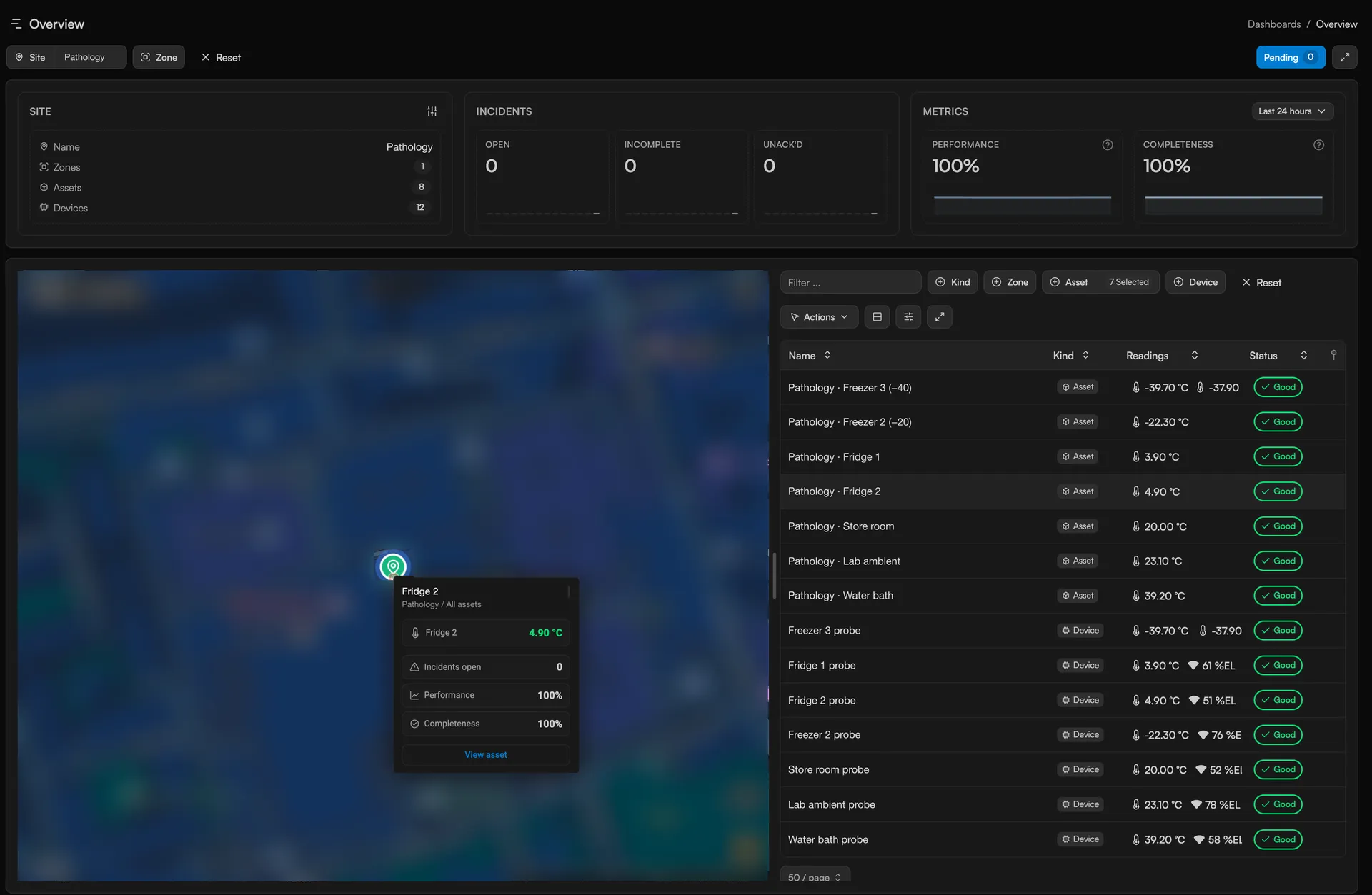
From reactive to proactive
Better monitoring changes how a business handles risk. Instead of reacting to failures, teams can spot trends before they become problems, plan maintenance on units that are starting to struggle, and cut waste by fixing the cause rather than repeating the clean-up.
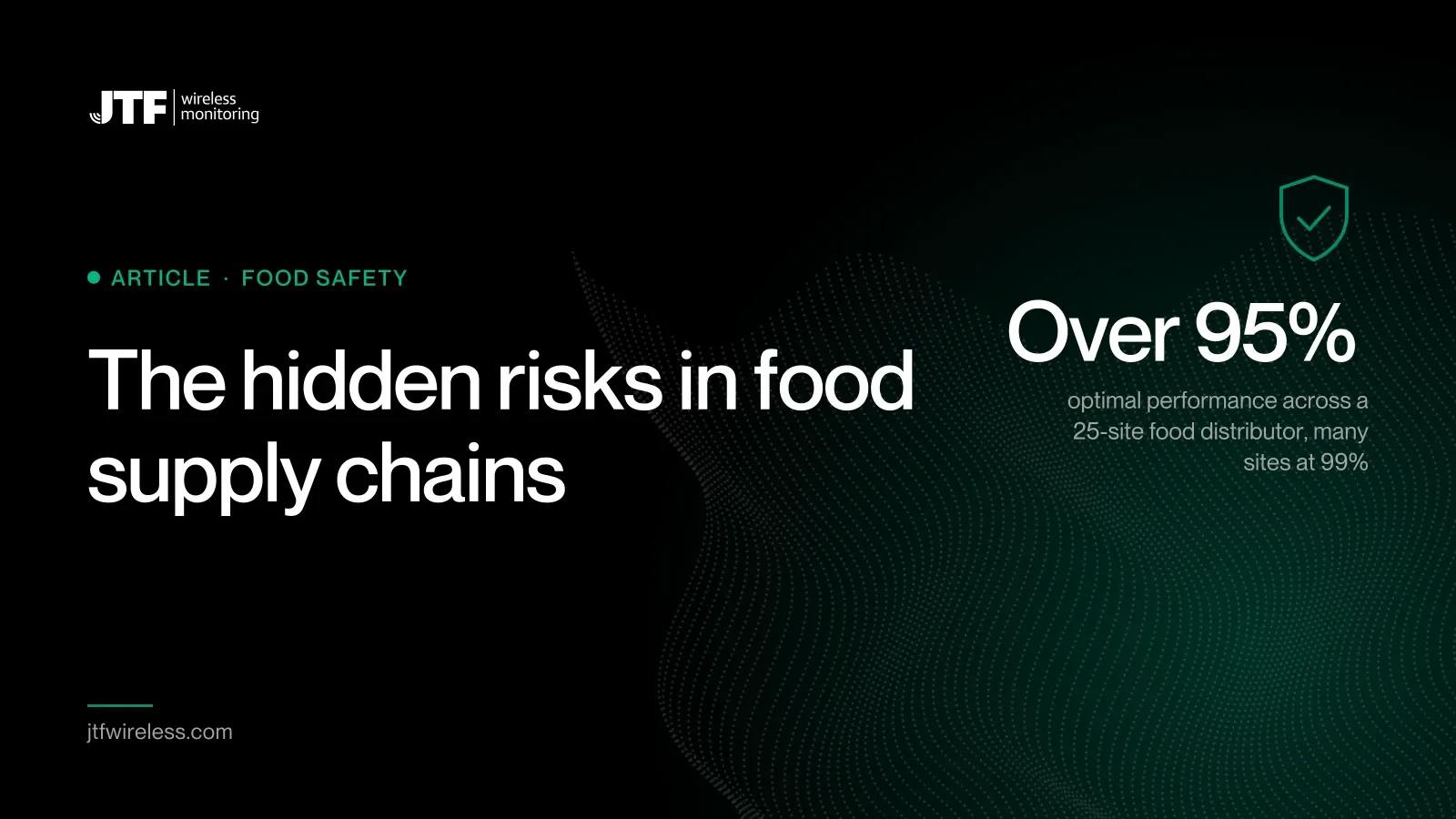
A UK food distributor with 25 storage sites used JTF and Sematics to fix misleading readings and act on its reports. Read the case study.
Over 95%
optimal performance across a 25-site food distributor, many sites at 99%
A 25-site UK food distributor on JTF monitoring and Sematics.
Prevention also means cheaper running. A store whose temperature stays steady uses less energy than one that is constantly recovering from door openings and drift, so the same data that protects stock helps you find energy waste.
Where to start
Map where your product changes hands and where you can't currently show a reading. Those are the gaps an auditor will find first. Then bring every site onto one record, set alarm limits that give people time to act, and make sure each sensor has a current calibration certificate: we offer calibration for every sensor we supply, traceable to national standards as standard or UKAS accredited where you need it (temperature in our own UKAS accredited calibration laboratory No. 10723, accredited to ISO/IEC 17025; other parameters through accredited partners).
For more on running a food business's monitoring, see food and cold storage and our guide to cold chain management for food logistics.
Questions people ask
Can monitoring show that a vehicle's refrigeration unit is starting to fail?
Often, yes. A unit that takes longer to pull down after each drop, or that drifts at the same time each day, shows it in the temperature trend before it fails outright. Sematics lets you see those trends and plan maintenance before the unit stops.
Does Sematics remind us when sensors are due for calibration?
Yes. Sematics sends alerts when a sensor's calibration is coming due, so certificates don't lapse unnoticed before an audit.
What calibration do JTF sensors have?
Calibration for every sensor we supply: traceable to national standards as standard, or UKAS accredited where you need it (temperature in our own UKAS accredited calibration laboratory No. 10723, accredited to ISO/IEC 17025; other parameters through accredited partners). Certificates are matched to each sensor's serial number and held on the platform.
What is the riskiest point in a food supply chain?
Usually the handover, when goods move between a vehicle and a store or between two businesses. It is short, often unmonitored, and hard to investigate afterwards without readings from both sides.